How Often Should You Change Your Guitar Strings?
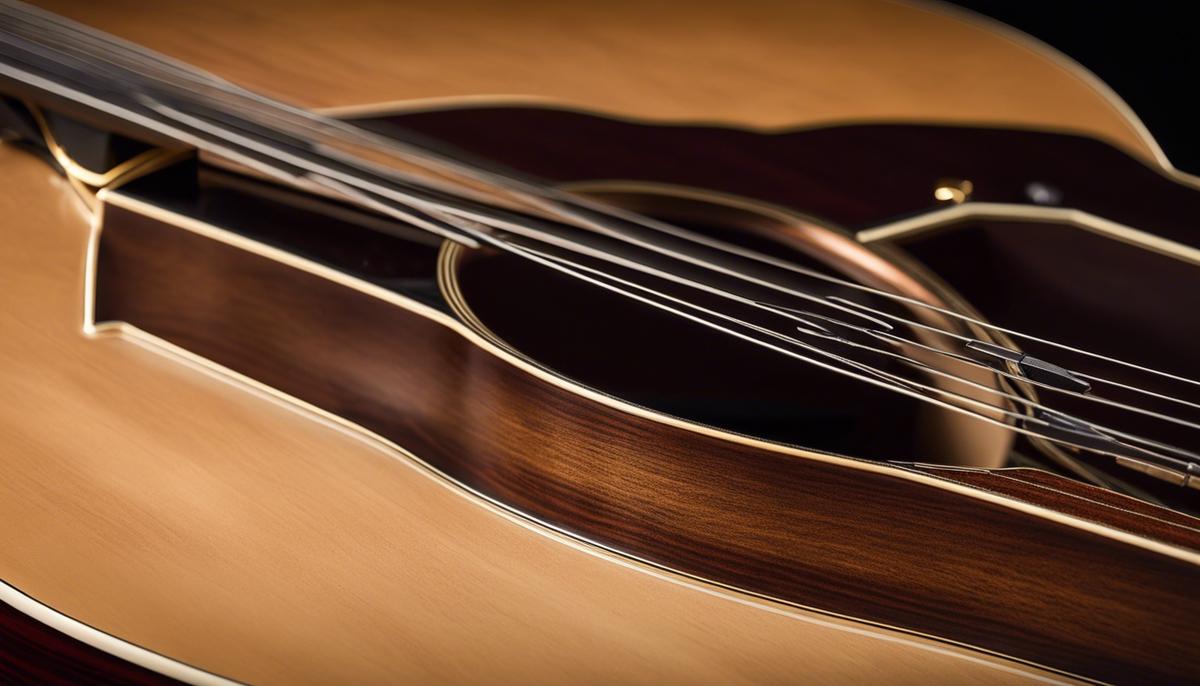
Image by Joel Bombardier
Is your guitar not sounding as bright as it used to? Are your riffs coming out sounding muddy? Maybe it’s time to change your guitar strings! Or maybe not…
Over time a guitar’s strings change in tone due to stretching and fatigue. A brand new set of strings will always start out with a bright tone and fade to a soft tone the more they are played.
There is no magic number of days, months, or hours of play. Your ears tell you when it’s time to replace your guitar strings.
If you prefer the crisp bright tone of a set of new strings then you will probably change your strings frequently, maybe on a monthly basis. If you like the soft tone of a set of broken-in strings then you probably wont change them very often. It all comes down to your musical style and tone preference.
I have a different preference for all of my guitars. On my Les Paul I love the way my riffs sound through a set of brand new strings. However, on my acoustic guitar I like this warm tonal spot that is half way between new and old. Because of that I change the strings on my electric guitar a lot more frequently than on my acoustic guitar.
Do I Ever Have to Change My Guitar Strings?
If none of them break then no, you really don’t. I know people who don’t even think about changing their strings and would never choose to. But what if you don’t have a choice? There are some factors that could be a clear sign that you should change your guitar strings.
The Sound. This is an easy one. If you don’t like the tone of your guitar strings any longer, slap a new set on.
Dirt and Grime – The oils, sweat, and even dead skin from your hands can easily build up on your guitar strings over time. If too much of this gunk builds up it can really hurt the strings tone and even hamper your ability to play. If your strings are really dirty this might be a time to restring your guitar.
Stiff Strings – If your guitar hasn’t been played for months or years the strings may become stiff and difficult to fret or strum. You can bring that guitar back to life by replacing the strings.
A Broken String – Many different things can cause a string to break. It could be normal wear and tear, an impurity in the string, or an intense jam session. When you break a string it’s my opinion that you should just replace the whole set.
Strings Wearing at the Fret – If you leave your strings on for a long time you will notice they will develop some flat spots caused by friction at the frets. Although this isn’t reason enough to warrant changing your strings, it will affect the tone and a string could eventually break at one of those spots.
When I first started playing I had this borrowed miniature acoustic that we called ‘the killer guitar’ because the action was so horrible it ‘killed’ your fingers. When it was lent to me it already had old strings on it. For years we never changed killer’s strings and over time those worn down spots eventually became a break in the winding around the string core making them like barbed wire. We were forced to change the strings and although the new set had much better action, the guitar never sounded quite the same.
Extending The Life of Your Guitar Strings
Factors like frequency of play, cleanliness and humidity can all play a part in the life expectancy of your guitar strings. A new set of strings sound bright not only because they are completely unfatigued but also because they are free of dirt, grime, and corrosion.
Play your guitar with clean hands.
You don’t have to develop an OCD but try to keep your hands clean of anything that could transfer to your guitar strings. You can also use a hand sanitizer which will even remove some of the natural oils on your hands.Wipe down your strings with a dry cloth after playing.
Your hands might get a little sweaty jamming in the hot months. If this happens wipe all that moisture away from the strings after playing.Keep your guitar in a guitar case.
This will prevent dust or anything else in the air settling on your guitar or its strings.
Following the above rules may not keep your strings sounding brand new forever. However, if you do follow them you can greatly extend the life and tone of your guitar strings.
The Easy Answer
I have outlined a few scenarios above which may prompt you to want to change your guitar strings but the easy answer is the decision is up to you.
New strings can bring a crisp tone to your music and improve the playability of your guitar. But if that doesn’t jive with your style of music then there is no reason to change your strings. Play those strings until they blow!
Related posts:
Tagged with: basics • beginner • maintenance • strings
Filed under: Guitar Basics
Like this post? Subscribe to my RSS feed and get loads more!


One note about the tone of new strings versus worn ones:
New strings tend to have a bright, sparkling quality to them. The sound is clearer, and the sound of the string, when plucked, sustains longer and decays less fast.
The sound of old strings do not sustain as long, and the sound is usually a bit muddy.
Both very good points. I have been playing on old strings for a few weeks now hoping to show some sound samples of the difference between old and new strings.
I had decided my favorite strings were Gibson MB-13 phosphor-bronze due to how they sound when they are new, but, man, it hasn’t been three full days and the strings are dead. I also tuned the middle strings four way up to E-E-A-E-A-D, which really stretches out the B, G, and D. Dead.
thanx dude this helped alot
happy playing
nick
I personally hate the sound of new guitar strings. This has to do, I think, with the particular stratocaster I use, which is already very very bright. New strings are way too treble to the point of being painful on that guitar. I love the warm sound of old greasy strings that have been percolating for a few months. I change my strings about once a year, and I hate the sounds I get the first few weeks. It totally sucks. But to each his own.
Marks above the frets on the strings can be difficult to tell apart from the reflection of the frets onto the strings so keep this in mind when determining whether or not to change
My G string keeps on going out of tune, this has just started to happen, I’ve had the guitar for well over a year and the strings are about 8 months old, average about 1 hr a day. Could it be the strings? Cheers.
I play a 50th Aniversary Strat with original strings that are over 6yrs old!! I love the sound, albeit somewhat dead and muddy. Makes for a different sound to work with, and with effects can be cool. Records remarkably well too!
I’m seriously considering buying another electric tho, so I can play with new strings too, but I think I’m going to keep the originals on the 50th for as long as i can.
@MJG Haha, that’s one expensive set of new strings! Right on though. I wish I had a second guitar that I could just leave a set of old strings on. Maybe I should check out the pawn shops.
Craig: That is EXACTLY the same position I found myself in a while ago. Like 8 months old, about an hour a day, and a G-string that always went out of tune. I went ahead and changed my strings after one of them broke, and it fixed everything. Also, I didn’t realize how bad my tone was until I switched them out: there was a huge, noticeably better change in my sound. Ever since then, I’ve been changing them about every 2 months.
Are you guys kidding? No more than a month if off period. When gigging, at least every other gig. Otherwise all the life gets sucked out of them.
I play electric. My strings tend to get covered in this brown dirt that is quite noticeable when i wipe it off with a rag. I even wash my hands usually before playing. the G string is always the dirtiest looking. even after a few days there are black markings where my fingers went the most. after a few weeks the G B E strings look gross and are actually painful to play unless I put this fret oil stuff on it. otherwise my fingers don’t slide good, it feels like a rusty wire under my finger. Do you think this has to do with the fact that my guitar is never in the case, i always have it out? I’m thinking maybe the air oxidizes the strings quicker when its not in case. But I haven’t really tried putting it in the case because I kinda play guitar throughout the day.
To Bryan: I had the same problem with my axe too. But I left mine in a case inside my trunk and boy that was a horrible idea. Humidity mixed up with all the sweat makes the strings get sorta rusty. Your best bet is to keep the guitar inside the case and at a nice fresh temperature. And don’t leave your axe in the trunk for a day just cus of women lol.
What about Nylon strings?
To Atomicmonkey, your guitar strings are covered in your sweat after playing so much. Your sweat is acidic, this is why it’s always beneficial to wipe your strings with a cloth whenever you play at any stage of picking your axe up, or that black gunk will ruin a perfectly good set of strings! They’ll last months if you do decibe ty clean them with just a cloth or some ‘special’ shop bought magic solution… save your money – just use a ordinary cloth to give em a good ole wipe down! Also, every week – check the intonation on your guitar. Because your strings naturally stretch – your intonation will drift too…!
Beg, borrow or steal a strobe tuner to check it!
DUST is really bad for any metal surfaces of your electric guitar or bass. Dust attracts moisture… which will then eat into the metal & completely ruin it. Some people love that road worn, battered, completely beaten up look… others like me prefer pristine almost virginal guitars that haven’t been touched by anyone else but me! If I scratch it or neglect it where it rusts… I’ll be, naturally, in a world of pain… But, if you scratch or neglect my guitar after borrowing it – you’ll be in an even bigger world of pain! Only kidding…
It’s Only a piece of wood with metal strings – at the end of the day! Yes, it’s an expensive, nicely worked piece of wood… in a life or death situation between saving my cat or guitar? It would have to be my cat… the grumpy, bad tempered evil moggie… who’s eating me out of house & home! Nobody told me you couldn’t feed them Wheetabix…!?
My classical guitar had a plastic saddle in the bridge. I decided to craft myself a new one made out of bone. This material is a lot more solid than any piece of plastic. It’s more resistant to string wear, and rumour has it… supposed to sound better? One major irritation about having a nylon strung classical guitar is the lack of adjustment at the bridge for setting the intonation to ensure that the 12th fret harmonic is at the same pitch as the 12th fretted note… which usually isn’t the case with most classical guitars. Why aren’t these bridges adjustable? Electric guitars are… even some acoustics. Classical guitars are lagging behind in their design. It’s time to modernize it!!! I’m not asking for the world – just for an adjustable bridge! I’ll ask for the world later…
Being able to adjust the intonation would add to the enjoyment of playing a guitar & not having the tuning drifting wildly about because you can’t adjust the string compensation. Time for a change!
I have a Fender Squire that I haven’t changed the strings since 1990 and I’m just going to change them now 2011. I try getting 25 yrs out of them. I might have another 7 out of these strings but I wanted to replace them for the new year.
Thank you for your comments.
I’m concerned with radiative effects from the string(s). Rather! I’ve had a lot of guitars, am 60, and would say: A little radiative effect to the young of the guitar neck from the fifth fret to the head would teach the player to use the fifth fret to twelfth fret. I don’t want any on the guitar I play. Or the strings! Have had to go with the cheap used, usually!
Since I find no report on the computer, I leave it at that.
Songwriter, out.
Articles like this piss me off…I want to know how often I should replace strings and nowhere in your article do you give a recommendation. I don’t care about the factors that cause strings to go bad, I want a definitive answer…6 months? a year? two years? Thanks for nothing.
When in doubt, change them every 3-4 months. I change them at Christmas, Easter, The Last Day Of School, and My Birthday. Strangely, they are all ABOUT 3 months. And you can ask for them as a gift for the 3 out of 4.
I gig every week and I change them every week. I play electric (lead)guitar–classic rock, blues. I do a lot of bends. If I leave strings on for two weeks they lose tone and sustain. I play clean a lot and need that sustain. They also start to go out of tune more often. I put about 15 to 20 hours on them a week.
Cheers
Any answers? I have 2 accustics with old strings but when I tune them they both have a string that will not stay in tune! Is this because they need changing?
Great article, especially on preservation of strings. Another good way to wear out strings quickly is a lot of up and down tuning. It’s better to just have two guitars if you like to play both standard and drop tune.
I am ebay seller Sidecarkenn and I sell musical intruments on ebay and I am a hard core Christian who follows the God of Abraham and His Son Yeshua so I follow the Covenant and am one of the Arms and Swords of the Lord so check out my ebay listings!